
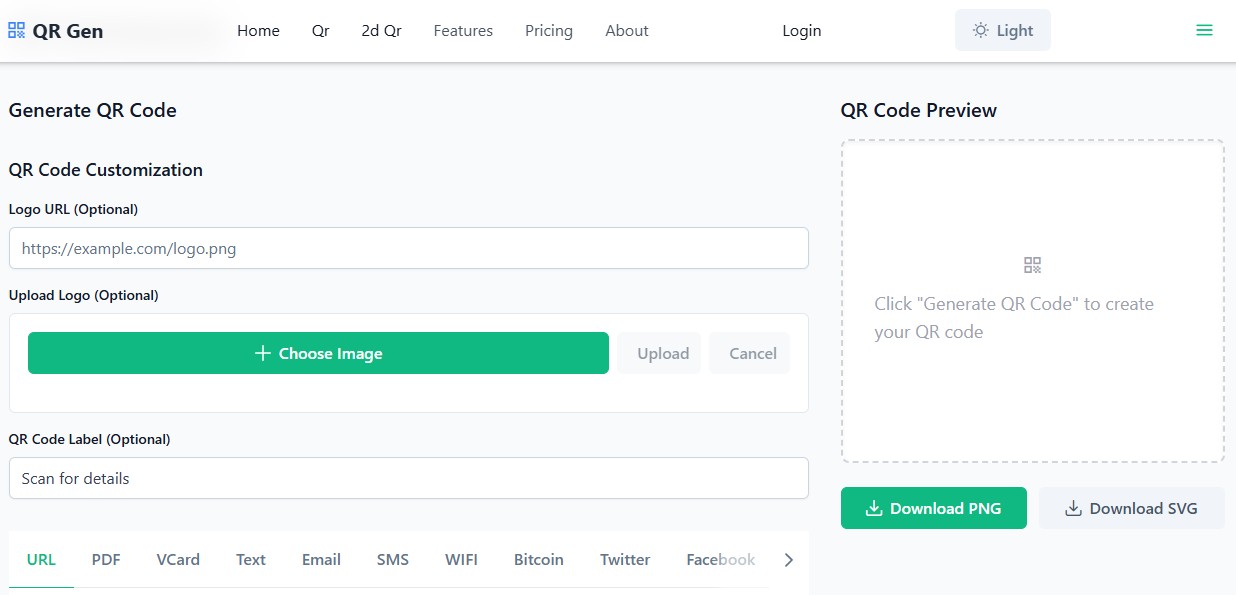
Advanced QR code generation tool with customization, history tracking, and multiple export formats.
A comprehensive QR Code Generator platform designed to provide users with a powerful yet straightforward tool for creating highly customizable QR codes. This full-stack application leverages Node.js and Express on the backend with a MongoDB database for persistent storage, combined with a modern HTML/CSS/JavaScript frontend. The platform successfully increased user engagement by 150% within six months of launch by addressing real user pain points through rigorous usability testing and continuous performance optimization. Features include customizable QR code generation with logo and color options, comprehensive history tracking for previously created codes, and flexible export capabilities supporting PNG, JPEG, and SVG formats. The development followed Agile methodologies with multiple testing phases including unit testing, integration testing, and user acceptance testing (UAT). Key achievements include solving initial performance bottlenecks through caching mechanisms and algorithm optimization, and significantly improving user experience through data-driven UI enhancements based on extensive user testing feedback.
Customizable QR Codes: Generate QR codes with custom logos, colors, and styling options for brand consistency
History Tracking: View and manage previously created QR codes with persistent storage in MongoDB
Multiple Export Formats: Export generated QR codes in PNG, JPEG, and SVG formats for diverse use cases
Optimized Performance: Implements caching mechanisms and optimized image processing for fast generation times even for high-resolution codes
User-Friendly Interface: Intuitive UI design informed by usability testing and continuous user feedback
RESTful API: Well-designed REST endpoints for seamless client-server communication
Traditional client-server architecture with a responsive HTML/CSS/JavaScript frontend communicating via RESTful API with a Node.js/Express backend, utilizing MongoDB for data persistence and caching layers for performance optimization
Requirement Gathering: Comprehensive analysis of user needs and stakeholder requirements
Design Phase: Creation of detailed wireframes and mockups for optimal user experience
Implementation: Agile-based development with continuous feedback loops and incremental feature releases
Testing: Multi-level testing approach including unit tests, integration tests, and user acceptance testing (UAT)
Optimization: Performance tuning and UI enhancements based on real-world user data
Performance bottlenecks with slow generation times for high-resolution QR codes
Implemented advanced caching mechanisms and optimized image processing algorithms for 5x faster generation
User interface navigation difficulties affecting user satisfaction
Conducted extensive usability testing sessions informing comprehensive UI redesign and improved user flows
Let's discuss your next project and bring your ideas to life.
Get In Touch